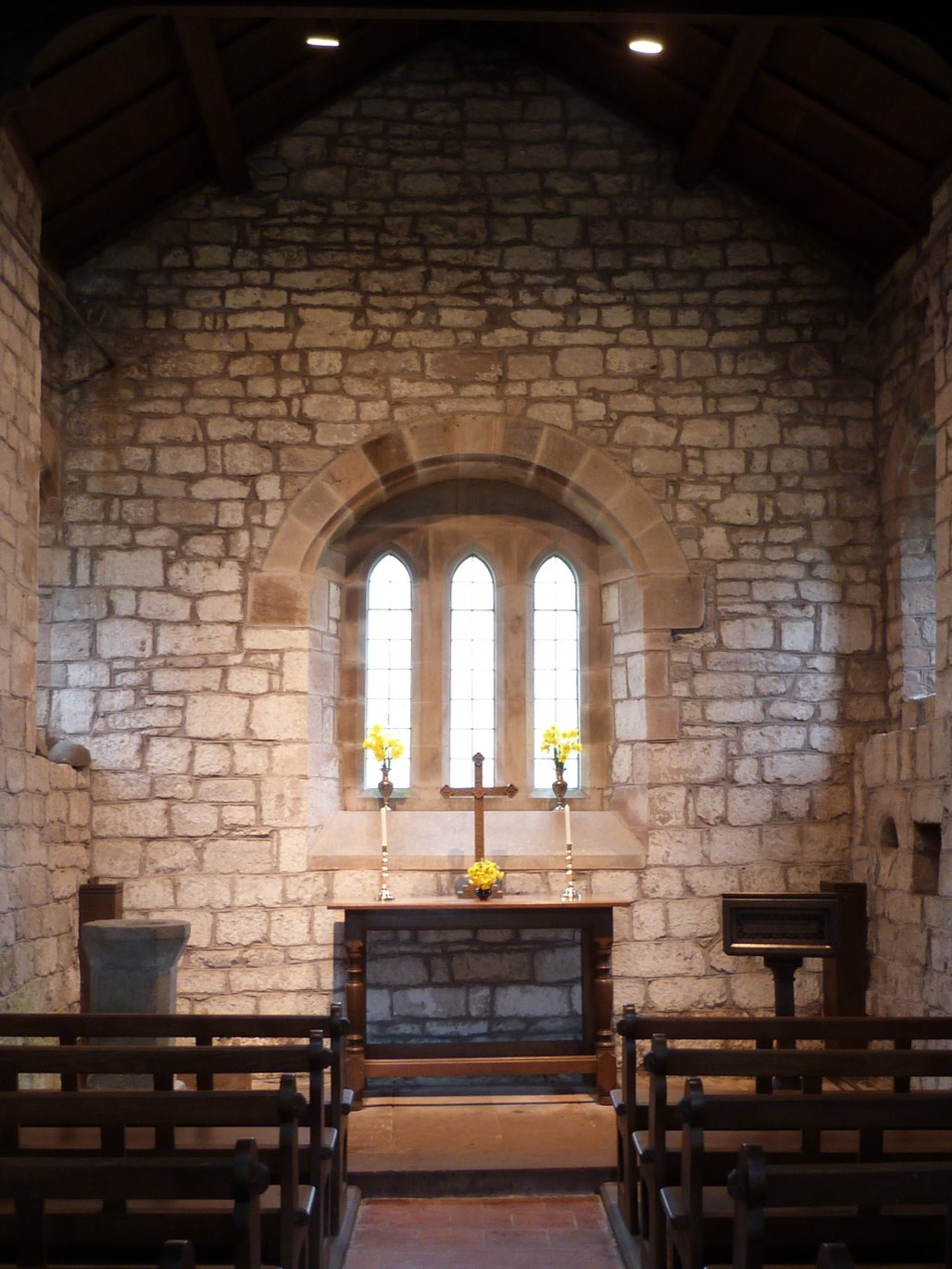
Follow a thousand years of change
Explore the Roman fort, the medieval Church of St Martin, the surviving chancel and the story of the building's preservation.
Read the church historyTo preserve for the benefit of the townspeople of Brampton and District the historical, architectural and constructional heritage in the area in the form of buildings of particular beauty or historical, architectural or constructional merit.
Plan Your Visit Support the TrustBrampton Preservation Trust is a registered charity founded in 1981 to serve the historic built environment of Brampton and its surrounding district. The Trust has over the years been involved in the stewardship of a number of notable local buildings, but today, the Trust's work is focused on a single remarkable site: Brampton Old Church, located approximately one mile from the town centre, which the Trust owns and maintains.
The church is one of the oldest ecclesiastical buildings in Cumbria, and the Trust works to keep it in good repair and its doors open to visitors, worshippers, and all who wish to experience this quietly extraordinary piece of local heritage.
All of the Trust's work depends entirely on the generosity of supporters, donors, and volunteers from the local community and further afield.
Brampton Old Church brings together Roman archaeology, medieval worship, local family history and the continuing work of a community charity.
Explore the Roman fort, the medieval Church of St Martin, the surviving chancel and the story of the building's preservation.
Read the church historyView films made at the church and find journal articles, the Historic England record, memorial inscriptions and further reading.
Explore research and filmsPlan a visit to the church and historic burial ground, then use the free self-guided booklet to follow fifteen stories around the site.
Plan your visitTwo independent creators have visited Brampton Old Church and shared the site with their audiences on YouTube.
A quick visual introduction to the church and its atmospheric setting.
Watch on YouTubeA longer look at the building, the burial ground and the history held within the site.
Watch on YouTubeThe privacy-enhanced YouTube player is loaded only after you press play. You can also open either film directly on YouTube.
Loading upcoming events…
For the most up-to-date programme, or to enquire about holding an event at the church, please contact the Secretary.
Brampton Old Church is among the most historically significant ecclesiastical sites in Cumbria, its origins stretching back over a thousand years. The building reflects centuries of architectural development, adaptation, and community stewardship.
The first proven use of the site was as a Roman fort on the Stanegate, the military road linking Corbridge and Carlisle. The fort stood on a spur above the River Irthing and would have housed an auxiliary unit of around 500 men.
Excavation has shown that the fort had turf-and-clay ramparts, a ditch, granaries, headquarters buildings and barracks. Carefully sealed post holes suggest that it was deliberately dismantled, probably when Hadrian’s Wall and its associated forts became operational.
Local tradition claims that the abandoned Roman fort was later used as a place of Christian worship. The dedication to St Martin, teacher of St Ninian, and the oval form of the old churchyard have been taken as possible clues, though archaeological evidence would be needed to confirm this.
The earliest documentary evidence for Brampton’s church dates to 1169, when it is mentioned at the dedication of Lanercost Priory. Osbertus, “persona de Brampton”, witnessed the dedication deed.
Thomas was instituted as vicar of Brampton in 1220, showing the church’s place within the established medieval parish system.
Richard de Caldecotes served as vicar of Brampton. His medieval cross-slab, carved with a chalice, book and Latin inscription, survives inside the Old Church and is one of the few such monuments in Cumbria that can be closely dated.
During the troubled period of the Border Wars, a fortified tower was added to the west end of the church. This tower is shown in a sketch made during a survey of Hawkhirst in 1753.
Following the Dissolution of the Monasteries, the advowson of Brampton church was granted to the Dacre family. It later passed to the Howards after 1569.
The Howard family became connected with the church after 1569, continuing the long association between Brampton’s parish church and the major families of the Barony of Gilsland.
The Earl of Carlisle’s Hospital Chapel was built in Brampton town centre. As the old parish church stood well outside the town, the chapel increasingly became the more convenient place for regular services.
Bishop Nicolson described the old church as small, dark, ill-seated and in poor repair. His comments reflect both the condition of the building and the growing inconvenience of a parish church so far from the town.
A small sketch attached to the 1753 survey of Hawkhirst shows the old church before demolition, including its west tower and the absence of a south aisle.
Permission was granted to take down the old church and its steeple, if appropriate, and to reuse the materials in altering the town chapel into Brampton’s parish church.
By 1789 the main fabric of the medieval church had been pulled down. The nave and tower were demolished, leaving the chancel to serve the old graveyard, which continued in use.
Parish rates were raised for repairs and cleansing of the surviving Old Church, which continued to serve the burial ground as a mortuary chapel.
The old churchyard was extended as families continued to use the burial ground. In the same year the surviving chancel was extended at its eastern end and a porch was added at its western end.
A visit by the Cumberland and Westmorland Antiquarian and Archaeological Society helped renew interest in the building. Later restoration revealed more of the medieval structure and left the chancel much as it appears today.
The churchyard was extended again, showing the continued importance of Old Church as Brampton’s burial place long after parish worship had moved into the town.
F. G. Simpson and I. A. Richmond carried out limited excavation, mainly in the southern half of the fort. They identified the fort’s defences, south gateway, granaries, headquarters building, barrack block and other internal structures.
The site was given scheduled monument status, recognising the national importance of the Roman fort, the buried remains of the medieval Church of St Martin, and the potential evidence for early Christian worship on the site.
The churchyard was closed during the 1960s, although the historic burial ground and its memorials remained central to the significance of the Old Church site.
After serving as a mortuary chapel for nearly two centuries, the surviving chancel was declared redundant by the Church of England.
Consolidation work was undertaken on the surviving church. Around this period, survey work in the graveyard helped suggest the likely size of the medieval church before its demolition.
Brampton Preservation Trust was formed by local people concerned about the loss of historic buildings and the special character of the town.
The Trust acquired Brampton Old Church from the Church of England and oversaw restoration work, securing the future of the surviving medieval chancel.
Brampton Preservation Trust continues to maintain the Old Church, encourage public access, and promote the care of Brampton’s historic buildings, streets and public spaces.
Start with the Trust's free graveyard guide, then continue into published archaeology, architectural history and family-history material.
Our eight-page booklet includes a numbered map and information about fifteen memorials and medieval grave covers in the churchyard and inside the church.
Read the two key Transactions articles on Brampton Old Church and the 1935 excavation of the Roman fort.
View the journal articlesOpen the official National Heritage List entry for the Roman fort and medieval Church of St Martin.
View the official recordFind the memorial-inscriptions publication and Peter Ryder's illustrated study of Cumbria's medieval cross-slab grave covers.
Explore memorial resourcesBrampton Old Church is maintained entirely through voluntary effort and the generosity of supporters. There are several ways you can help us continue this vital work.
A financial contribution of any size makes a direct and lasting difference to the conservation of the church. Donations can be arranged through the Trust, or made through the collection box in the church.
Ask about donatingWe welcome volunteers to help with cleaning, maintenance, open days, and special events throughout the year. No specialist skills are required, just enthusiasm.
Ask about volunteeringShare news of the church and Trust with friends, family, and community groups. Awareness is among the most valuable resources we have.
Follow and share on FacebookKeep up to date with news, events, photographs, and announcements from Brampton Preservation Trust.
Visit our Facebook PageContact the Secretary to discuss donating, volunteering, events, or other ways to help care for Brampton Old Church.